
Changing the Story: The First Step Toward Post Traumatic Growth by Christopher Gage
Updated: Jul 15

The Story You Tell Yourself Determines the Life You Build
When something traumatic happens, most people ask, "Why did this happen to me?" Eventually, another question grows even more important: "What story am I going to tell myself about what happened?"
Psychologists Richard Tedeschi and Lawrence Calhoun from the University of North Carolina at Charlotte found that Post Traumatic Growth emerges from the way trauma shatters our old assumptions, forcing us to rewrite the story we believe about who we are, what our lives mean, and what remains possible.
Looking back over the past eight years, I can now see that rebuilding my identity came first, and rebuilding my life followed from it.
Before the Explosion: I Already Had a Story
Long before fire became part of my story, I believed I already knew how the story would unfold.
I was a chef who loved creating meals that brought people together around a table. I was a business owner who had spent years learning, sacrificing, and taking risks. I was the husband of Holly, and father of Meghan and Ryan. I was Ryan's business partner in this venture. After nearly ten years of dreaming, planning, and building toward a business we could share together, it finally felt like we had arrived.

My identity felt solid because it was reinforced every day by what I did and the roles I filled. I knew who I was, and I believed I knew where my life was headed.
I now realize I had written a very specific narrative about my future. Every one of us does. We create stories that explain who we are, why we're here, and what tomorrow will probably look like. Those stories give us confidence and stability. They help us make sense of our lives. Rarely do we stop to consider what would happen if every chapter we had planned suddenly disappeared.
Then came August 12, 2018.
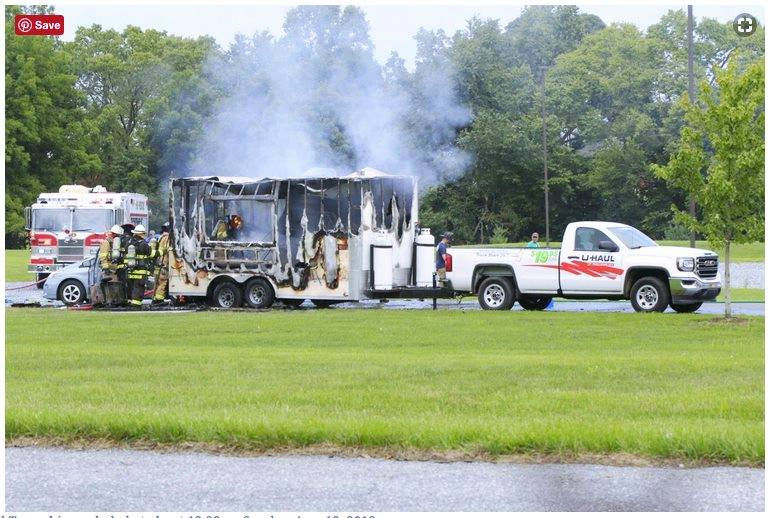
In a matter of seconds, a propane explosion destroyed our mobile restaurant, severely burning both Ryan and me, and erased the future I thought I was working toward. The identities I had spent years building – as chef, entrepreneur, provider, and business partner – were stripped away with it. The story I had been telling myself collided with a completely different reality.
I would come to understand that healing would require me to learn how to tell a completely new story about who I was, what had happened to me, and what my life could still become. That journey eventually led me to discover Post Traumatic Growth and, years later, to co-found Healing Phoenix Arts, where we now help burn and trauma survivors use creativity, compassionate connection, and guided discussion to discover that their scars can become the beginning of a new story.
Waking Up Without Knowing Who I Was
When I finally opened my eyes after a two-and-a-half-week coma, I hardly recognized myself. My body, and especially my face, had become unfamiliar. I was burned over 40% of my skin, nearly the entirety of my torso – front, back, and sides. Nearly thirty pounds had disappeared. I had to learn how to walk again. I could not raise my arms above my elbows. A concussion left my thoughts slow and scattered, making even simple conversations difficult to follow. I could not remember how old I was, and I did not comprehend anything I attempted to read. Infections interrupted healing. My left eye lost 40% of its vision. Skin grafts covered much of my body, replacing skin I had once taken for granted. Around my hospital bed were the faces of my family, exhausted from watching over me, hoping each day would bring another small sign of progress. Who was I now?


Tedeschi and Calhoun's research describes exactly what happened to me: trauma upends our entire understanding of the world we live in, how it works, and our own place in it. Before the accident, I knew who I was. In seconds, that certainty gave way. My scars stood as the visible evidence. The deeper wounds stayed invisible: the loss of identity, confidence, certainty, and the belief that tomorrow would build upon yesterday.
I now can understand that this painful unraveling became the beginning of something unexpected. Growing into a new life meant first grieving the life, and the person, I thought I had lost. That realization has become a cornerstone of the work we now do through Healing Phoenix Arts, helping other burn and trauma survivors discover that trauma can rewrite their story while leaving the ending fully in their hands.
Going Home Was Harder Than Leaving the Hospital
One of the biggest surprises in my recovery came after I left the hospital. The hospital held plenty of pain, and it also gave each day a clear purpose – to get myself well enough to go home. There were surgeries, therapy sessions, medications, and measurable milestones. The hospital's goal was to heal me to a place where I could leave.
Going home changed everything. The structure of the hospital disappeared, and I was left with long stretches of time in my head, facing questions no doctor could answer. My business was gone. Working in the kitchen the way I once had felt impossible to imagine, and I genuinely wondered whether I would ever want to cook again. The future that had seemed so certain was gone.
This painful time became the beginning of something unexpected. As we share through Healing Phoenix Arts, healing often begins when we discover that our identity is larger than what we have lost. That realization arrived slowly, and it became the first step toward finding purpose beyond the fire.
The Story I Was Telling Myself
In the months and years after my burn injury, the story I was telling myself was shaped by loss, grief, and survival. I leaned on alcohol as a crutch during times when the memories of what happened felt inescapable. I grieved the loss of my business, the unbelievable change my body went through at the age of 56, and the strain everything that happened put on my relationship with my son.
All of this reflected strength moving through real pain, and an honest reckoning with what had happened. One of the most important lessons I have learned through my own healing, and through the work of Healing Phoenix Arts, is that genuine recovery begins by facing reality fully.

Psychologists Richard Tedeschi and Lawrence Calhoun, who developed the concept of Post Traumatic Growth, drew a clear line between growth and unrealistic optimism. They encouraged survivors to hold their suffering honestly, naming the tragedy for exactly what it was.
Post Traumatic Growth looks directly at the devastation and asks, "This is terrible, now what?" That question became the turning point in my own journey. I slowly began discovering that healing could coexist with grief, letting the scars and the past stand as they were while I moved forward.
At Healing Phoenix Arts, we believe that transformation happens because, through creativity, compassionate connection, and the courage to tell a new story, survivors find purpose beyond what happened to them.
Why Narrative Matters in Post Traumatic Growth
Stephen Joseph, affiliated with the University of Nottingham, UK, is a prominent researcher in the field of human flourishing, recognized worldwide as a leading authority on positive psychology. He believes that one of the most powerful forces shaping our recovery is the story we tell ourselves. People are always telling themselves stories, and those stories become the lens through which we interpret our pain, our future, and even our identity.
After my burn injury, the first version of my story could easily have circled around blame and fear: Why did this happen? Who is to blame? What am I going to do? Is my life going to spiral down a dark hole? From the first days of consciousness in the hospital, I somehow knew that I was going to take account of what happened, recognize it as an accident, and hold as positive an outlook as I could manage.
At Healing Phoenix Arts, we often say that our scars become stories, and those stories can either imprison us or help us grow. My narrative changed naturally, growing from lived experience.
Through honest conversations, creating art, reflecting on my experience, and finding others who understood, I began asking different questions. I found myself asking, "What can this experience teach me?" I slowly began discovering what was still possible. That shift in narrative became one of the first real steps on my journey toward Post Traumatic Growth, letting a new story emerge alongside the pain.
Deliberate Rumination: The Beginning of a New Story
In the early days after my burn injury, my mind filled with intrusive thoughts — the kind that arrive uninvited, replaying the explosion, the pain, the losses, and every fear about the future. Those thoughts simply reminded me of everything that had changed.
During my two months in the burn unit, long stretches of isolation left me with nothing but a lot of time in my own head. Somewhere in those hours, the questions began to change. Who am I now? What remains? What still matters? Can this suffering become useful? What kind of man do I want to become?
That shift marked the beginning of deliberate rumination which is the intentional process of wrestling with life's hardest questions in search of meaning. Deliberate rumination became the slow work of rebuilding my life. As I review where I was eight years ago, I recognize those lonely hours in the burn unit as some of the most important moments of my recovery.
This is where I created a new story for myself — one that eventually led me to co-found Healing Phoenix Arts. Through programs like the Warrior Scar Jewelry and Group Discussion, and Burn Survivor Wellness Retreats, we invite survivors to honor their scars, reshape their narratives, and discover that growth can emerge even from life's deepest wounds.
Role Models and the Permission to Grow
Dr. Tzipi Weiss is an associate professor at LIU Post's Department of Social Work and Director of the undergraduate program. She specializes in research on transformation through struggles with traumatic events and aging. Her work reminds us that growth typically begins in community. It often starts when we meet someone who has already walked through a similar experience and returned with hope. Their story tells us, "If I can make it, maybe you can too."
That proved true in my own recovery. In the beginning, joy and purpose felt impossibly distant. As a burn survivor, I searched for someone who could show me that a meaningful life remained possible. Sometimes that person was another burn survivor, such as the many wonderful people I met while volunteering at a Camp Susquehanna’s burn camp for children six months after my accident.

Sometimes it was a member of my medical team whose encouragement arrived at exactly the right moment. Sometimes hope came through creating art while cutting and polishing stones as a lapidary artist, discovering that something raw and rough could become something remarkably beautiful. I found it in the jewelry my wife Holly designed that transformed scars into symbols of resilience. I found it in my renewed universal spirituality, which reminded me that suffering always gives way to another chapter.
Believing healing is possible often starts with borrowing someone else's hope.
That simple truth has become one of the foundations of Healing Phoenix Arts. We believe that healing happens in community, where stories are shared, creativity opens new doors, and people discover they belong among others. Through our Warrior Scar Jewelry Workshops, Wellness Retreats, and conversations, we have watched survivors begin to see themselves differently because someone who had already traveled the road walked beside them for a while.
I now realize that every person who inspired me was giving me permission to grow. Today, I hope my own story can do the same for someone else. If my journey from burns, loss, and uncertainty to purpose, creativity, and service helps even one person believe that life can become beautiful again, then the hope I once borrowed becomes hope I can now give away.
Telling My Story Changed My Story
When I first began writing about my burn injury, I set out to document what had happened. I wanted people to understand the reality of surviving catastrophic burns – the surgeries, the scars, the pain, and the long road back. I shared photographs that many people would have found difficult to look at because I wanted to replace curiosity with understanding.

The greatest surprise in all of this was the irony of the journey: the more vulnerable I allowed myself to become, the stronger my identity became. Every time I chose honesty over withdrawing, shame lost a little more of its power. I was writing to transform my relationship with my past. This same path shaped the mission of Healing Phoenix Arts. Healing happens when we give our scars a voice.
Reinvention Means Weaving the Past Forward
At Healing Phoenix Arts, we believe healing invites you to work every chapter of your life into something stronger and more meaningful. Through our Warrior Scar Jewelry workshops, survivors transform Silver Metal Clay (an easy to use moldable metal) into deeply personal works of art that symbolize resilience.
The jewelry represents part of the journey. As participants create with their hands, they also share their stories, learn practical tools based on Post Traumatic Growth, and discover that creativity can become a bridge from surviving to thriving. Our role centers on helping people integrate their experiences into a renewed sense of purpose.
The scars remain, carrying a story that continues to grow. They become visible reminders of strength, compassion, and the unique ability to use one's own journey to encourage and uplift others. At Healing Phoenix Arts, we believe that when survivors create with purpose, they often discover that their greatest wounds become the very places from which hope, service, and healing grow.

Eight Years Later
Eight years later, I can honestly say that healing continues as a path I walk every day. Struggle still meets me along the way. There are mornings when my scars ache and feel stiff, memories surface without warning, or grief catches me by surprise. Losses remain painful: the business we built together, the plans that disappeared overnight, and the version of life we thought we were living.

Those things will always matter, and something else has grown alongside those losses. Through creativity, community, and the work we now do at Healing Phoenix Arts, I have discovered that healing means becoming someone new. Today, our mission is to help burn and trauma survivors rediscover confidence, self-worth, and joy through creative expression and compassionate connection, because we've learned firsthand that even the deepest wounds can become the foundation for purpose.
I often say to others, "I would go through all of that again, because I feel that I am a better person now, and everything that came before it brought me to where I am." I exist as who I am today because of all that life experience.
Final Thought
Trauma writes the first chapter of a new life, and the ending belongs to us. We heal by giving the old story new meaning — one that makes room for grief, resilience, and eventually, growth.
Reflection for the Reader
I invite you to pause and consider the story you've been telling yourself ever since your experience. Post Traumatic Growth begins when we become willing to question the narrative that trauma wrote for us and begin authoring one grounded in resilience, purpose, and hope. At Healing Phoenix Arts, we believe that healing happens when people are seen, supported, and empowered to rediscover their confidence, self-worth, and joy through creativity and compassionate connection.
So ask yourself:
What story am I telling myself about my trauma?
Does that story help me heal, or keep me trapped?
What assumptions about myself have been challenged?
What kind of person am I becoming because of this experience?
What still gives my life meaning?
What possibilities have I ruled out by holding onto an old story that no longer serves me?
Your scars belong to your history, and they can become part of an ongoing story rather than its conclusion. Every day offers another opportunity to choose a narrative that honors your pain while embracing your strength, a story that discovers the person you are capable of becoming.
Christopher Gage is the co-founder of Healing Phoenix Arts, a 501(c)(3) nonprofit organization he leads with his wife, Holly. After more than 30 years as a chef, caterer, personal chef, and mobile restaurant owner, Chris found new purpose following a life-changing burn injury in 2018. Today, he is dedicated to helping burn and trauma survivors heal through Healing Phoenix Arts' Warrior Scar Jewelry Program, Wellness Retreats, and Workshops, all grounded in the principles of Post Traumatic Growth.
To learn more or bring the Warrior Scar Jewelry Program to your community, contact Christopher Gage at (717) 917-2358 or gageman@ptd.net, or Holly Gage at (717) 445-5755 or hgage1@ptd.net.


Comments